Airside driver training
Train Airside Drivers Safer, Faster, for Less
Drivers practise on your apron, taxiways and runways before they drive them for real, with no vehicles, fuel or runway time taken from operations.








Why airports use it
Better Drivers, Without the Cost of Live Training
-
Safer Training
Practise emergency procedures and runway incursion prevention without endangering staff or aircraft.
-
More Practice, Lower Cost
Apron drivers rarely get practice time airside. On the simulator every driver does, without taking vehicles, runway time or slots from live operations.
-
Faster Onboarding
Instructors watch several trainees at once from a Supervisor Station. Trainees can also practise alone, and their results go into your LMS.
Who it trains
Apron and Runway Drivers Need Different Training
Apron Drivers
The largest group: ramp staff from ground handlers and others working on the apron. Train them in numbers with scripted scenarios focused on safe distances around aircraft and giving way to traffic. Drivers drive in poor visibility and respond to unexpected hazards, with instructors reviewing their decisions. Sessions can be repeated until good habits stick.
Taxiway and Runway Drivers
Mostly airport staff, with more safety-critical work and radio phraseology to learn, so training is one to one. They practise stopping at lit stop bars and calling ATC on the ground and tower frequencies, while a supervisor checks they use the right one. Taxiway and runway time is hard to get. On the simulator it is always available.
Case study
Inside Sydney Airport's 7-workstation Driving Centre
Sydney Airport built a driving centre with 7 Aveo simulator workstations. Simulation is part of its standard airside driver training.
drivers completed their training in the simulator
received an aircraft-related infringement within 3 months, with simulator training
received an aircraft-related infringement within 3 months, without simulator training
Figures from Pomate Visesio, Ground Standards and Training Supervisor, Sydney Airport
Key features
What the Simulator Does
Realistic Airport Environment
Drivers train in a digital twin of your airport, with its real signs, lights and layout. Exercises based on real airside incidents let them practise at your hotspots.
Learn more →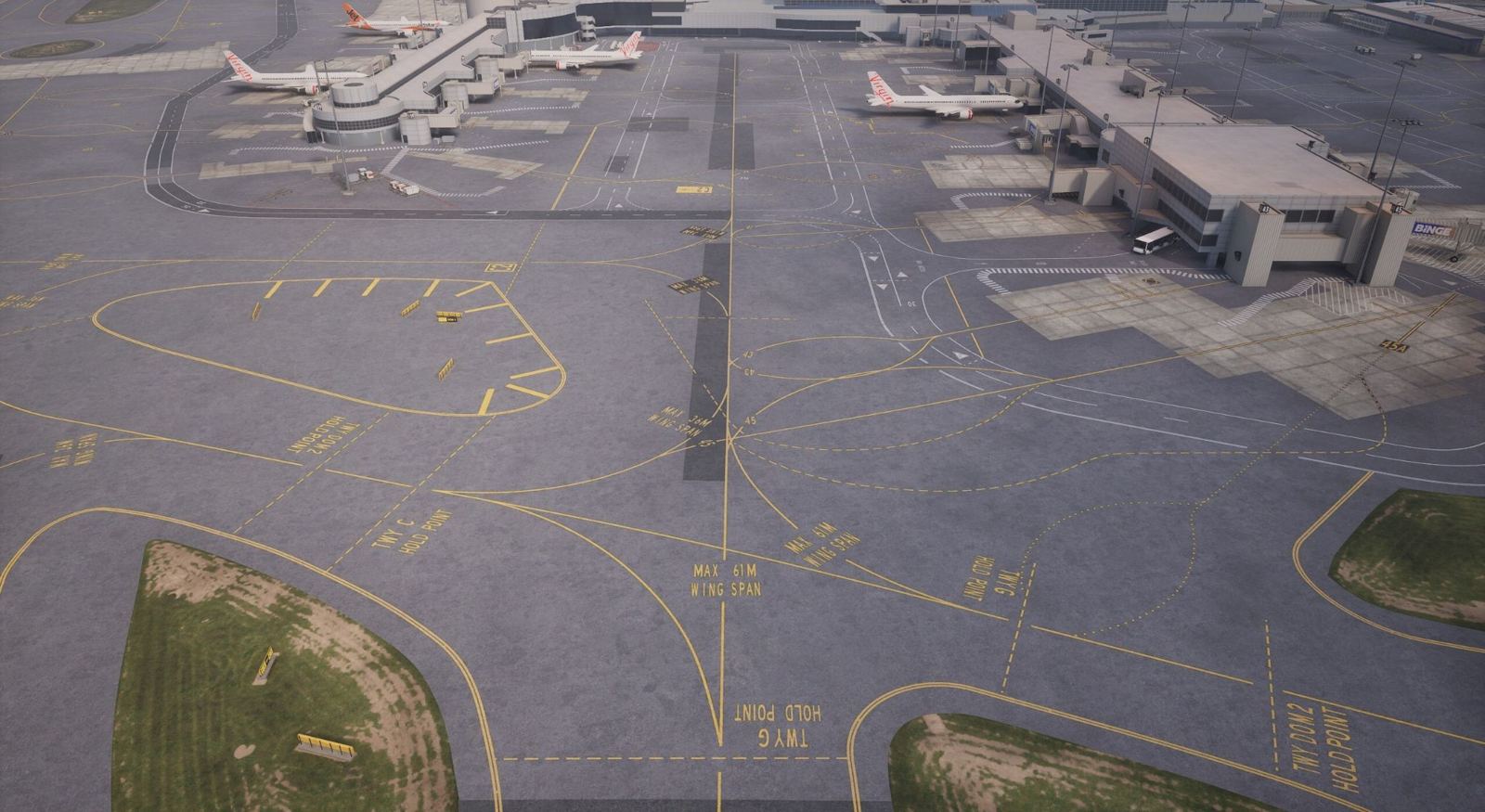
Dynamic Weather Effects
Train in rain, fog, wind, snow, low sun and thunderstorms, and at night.
Learn more →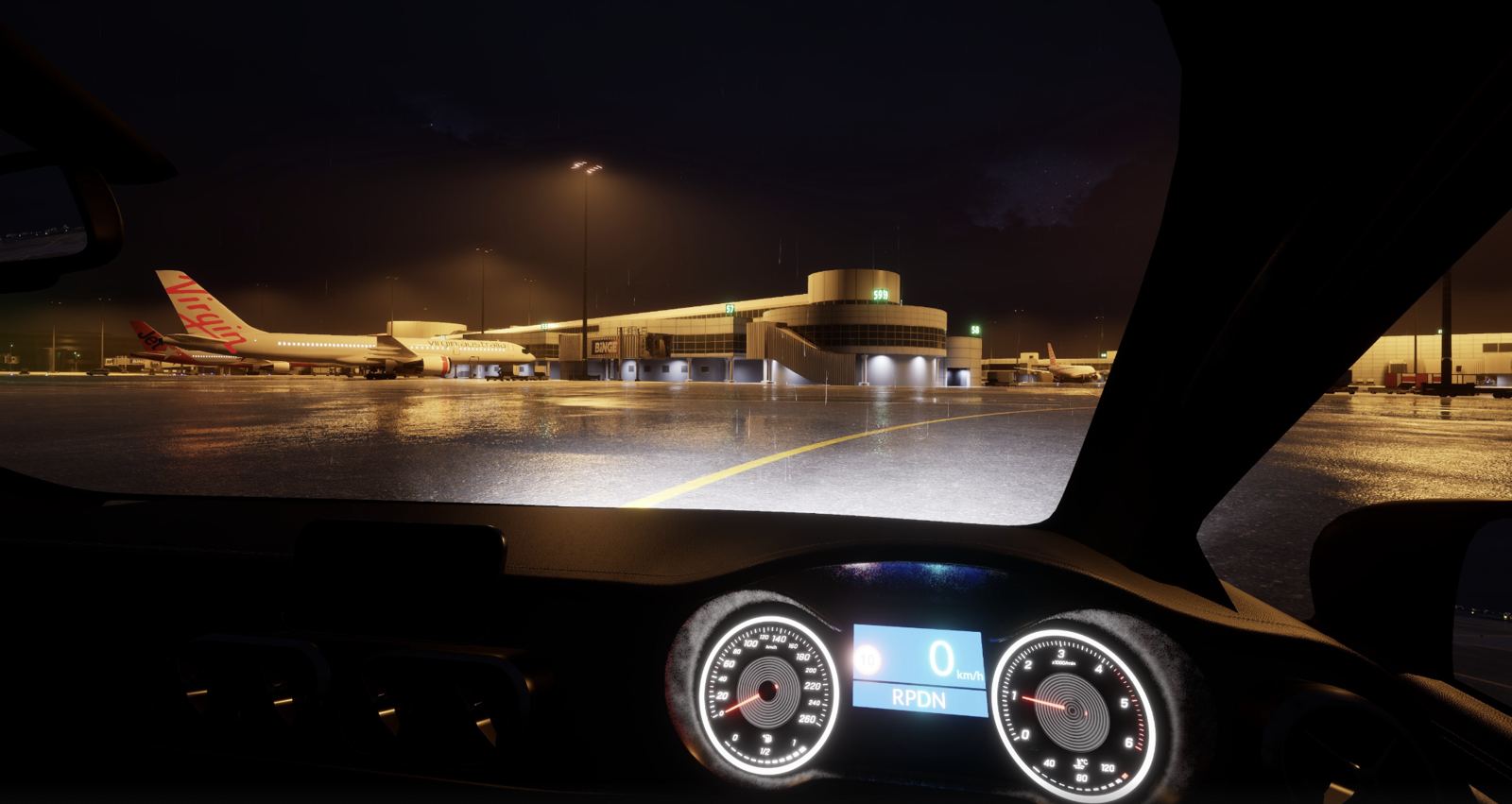
Performance Monitoring
The simulator detects and scores each driver's violations, so instructors can see who needs more practice.
Learn more →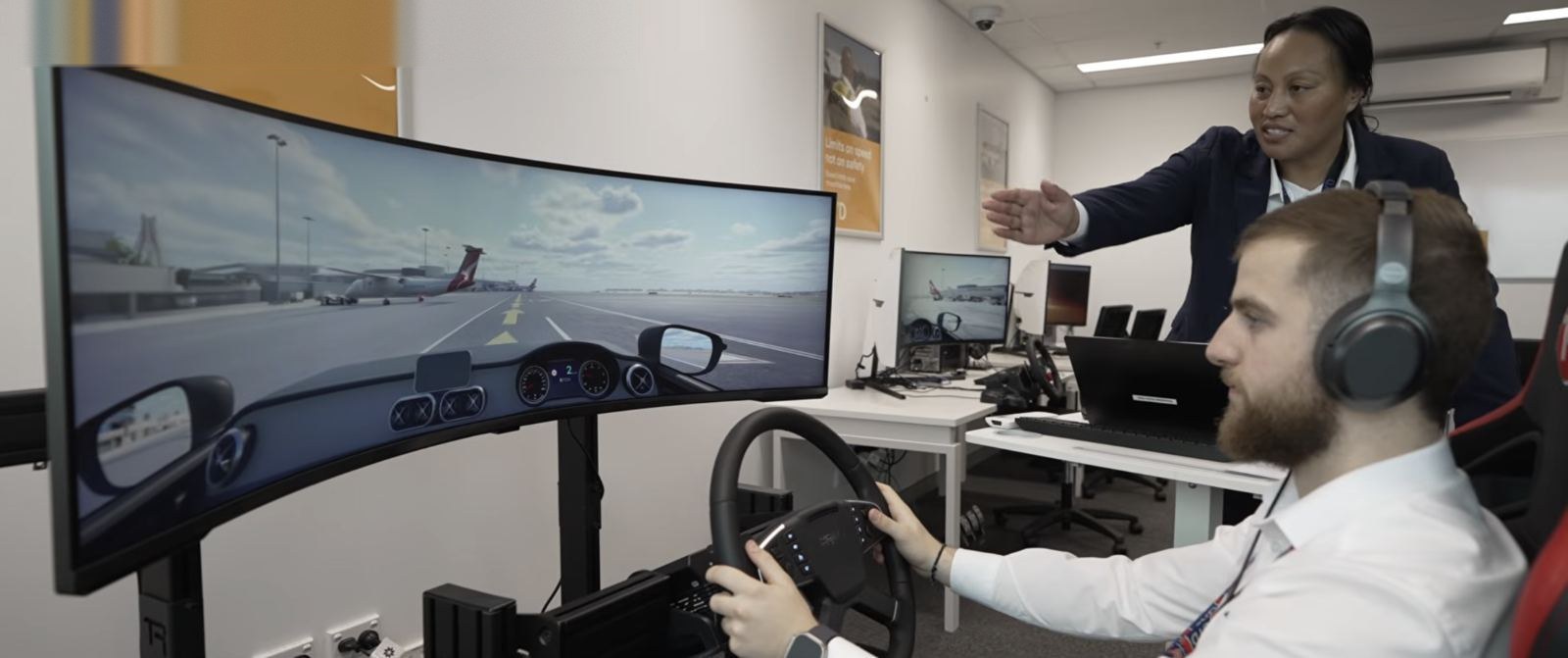
6-month Proof of Concept
Try It on Your Own Airside
Test the simulator on your own airside for 6 months before you commit.
- Simulator and supervisor workstation loaned for 6 months
- Part of your airside modelled for free
- Pay only the monthly subscription, with no purchase commitment
Integrations
Connects to Your Learning Management System
The simulator can connect to any LMS. Exam results and competency profiles are recorded automatically, so nobody has to type them in twice.
Partnership with AIRDAT


AIRDAT's PASSPORT Training system is connected to the Aveo Driving Simulator, so simulator results go straight into each driver's training record.
"To stay compliant, airports need drivers who are ready, and the evidence to show it. Aveo’s simulator does the first with practical, scenario-based training, and Passport does the second, adding the results to each driver’s training record."
 David SankeyCEO, AIRDAT
airports live
What customers say
In Their Words
"The airside driving simulator not only allows us to deliver an enhanced, highly engaging initial training course but also enables us to recreate specific incidents or near misses based on reports received through our SMS reporting platform. Our fire team are already using the simulator for Low Visibility Procedures (LVP’s) airfield search training and we’re really looking forward to introducing winter operation simulations for the airside operations team."
 Richard DuncanHead of Airfield Operations, Leeds Bradford Airport
"The Aveo Airside Driving Simulator has revolutionised our training approach, significantly enhancing safety. It offers students hands-on experience in a risk-free environment, allowing them to master complex procedures confidently."
 Hilmar Thor AevarssonTrainer, Keflavík Airport
Why now
Regulators Are Already Pointing at Simulation
Regulations do not name a simulator, but they do ask airports to show that drivers can handle emergencies and bad weather safely. A simulator is a practical way to train for it and keep the records.See the full regulatory landscape by region →
- EU / EASAAerodrome Regulation (EU) 139/2014 · EAPPRI
- United States / FAA14 CFR Part 139 · Advisory Circular 150/5210-20A
- ICAO (international)Annex 14 · Doc 9981 (PANS-Aerodromes) · GAPPRI
- UK & AustraliaUK CAA CAP 790 · Australia CASA CASR Part 139
Questions and answers
Answers for Your Role
How Does the Simulator Generate an ROI for the Airport?
No fuel or vehicles are used in training, and drivers learn to avoid the mistakes behind costly airside accidents.
Training Managers & Instructors Focus: training control, throughput, realismCan I Train for Scenarios Difficult to Replicate in Real Life?
Yes. Heavy rain, fog, low sun, thunderstorms and night driving can be triggered instantly, and a Winter Ops module covers snowplough and convoy training.
Airside Safety & Security Management Focus: compliance, accident reduction, safety cultureDoes It Help with Regulatory Compliance?
Yes. It helps you meet training and competency requirements set by EASA ADR, ICAO Annex 14 and UK Regulation (EU) 139/2014, with an audit-ready record of each driver.